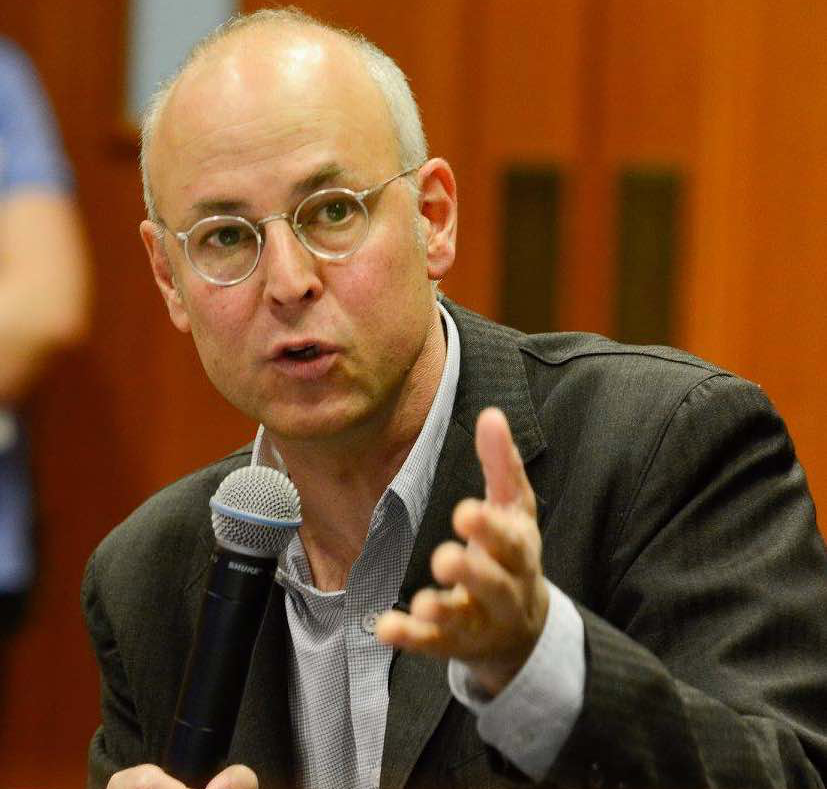
David Shenk is the award-winning and national-bestselling author of six books, including The Genius in All of Us ("deeply interesting and important" - New York Times), The Forgetting ("remarkable" - Los Angeles Times), Data Smog ("indispensable" - New York Times), and The Immortal Game ("superb" - Wall Street Journal). He is creator and co-host of the public radio podcast "The Forgetting," creator and executive producer of the Living with Alzheimer's Film Project, and a contributor to National Geographic, Slate, The New York Times, The Wall Street Journal, Nature Biotechnology, Gourmet, Harper's, Spy, The New Yorker, The Atlantic, The New Republic, The American Scholar, The Huffington Post, NPR, BBC and PBS. Shenk lives in Brooklyn.
His most recent book, The Genius in All of Us: New Insights Into Genetics, Talent, and IQ 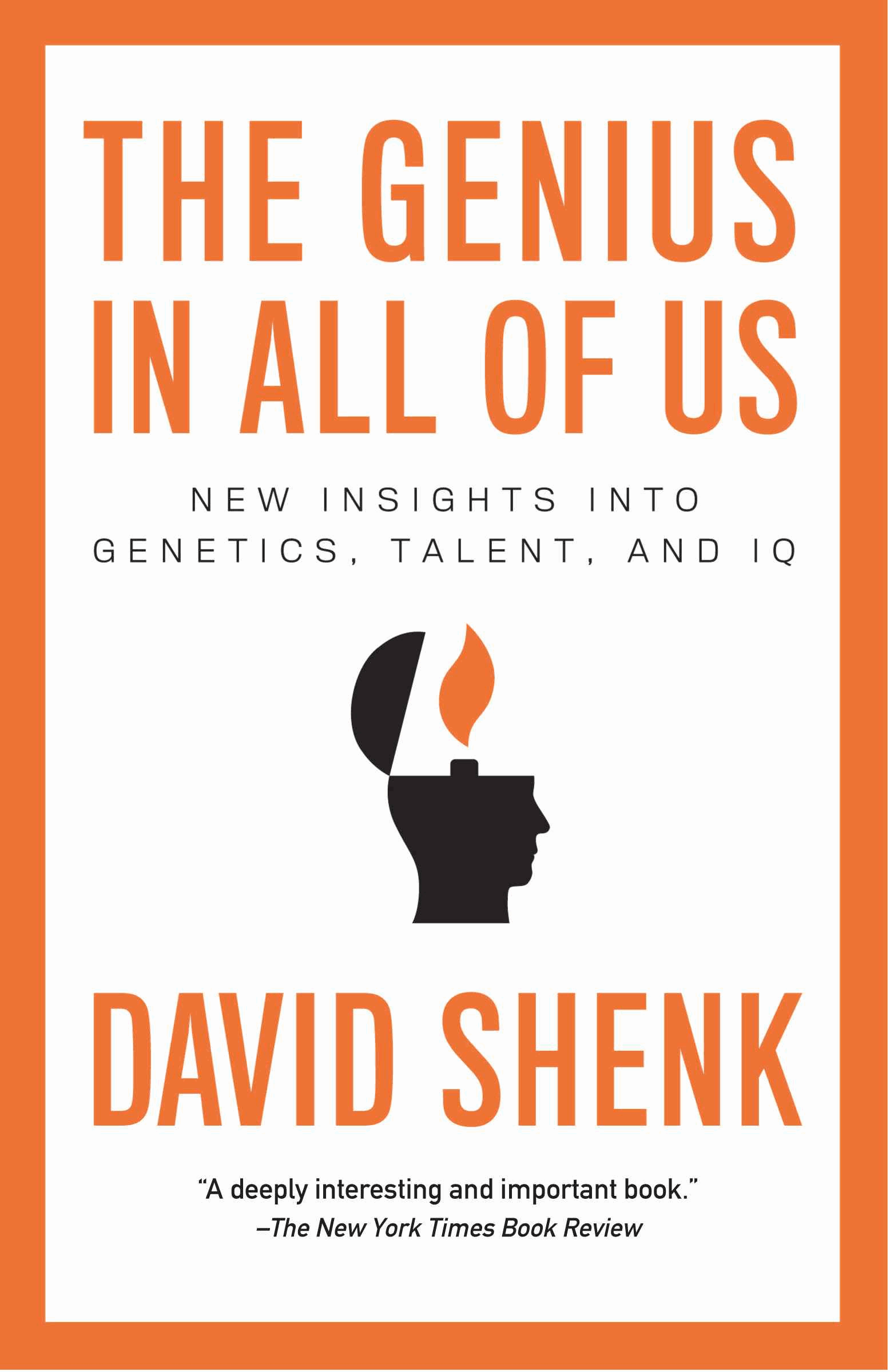 (Doubleday, 2010), was welcomed as "a deeply interesting and important book" by the New York Times, "profound," by the London Evening Standard, and "a thinking man's Outliers" by New York magazine. Salon's Laura Miller said, "The Genius in All of Us has quietly blown my mind." (More reviews here). (Doubleday, 2010), was welcomed as "a deeply interesting and important book" by the New York Times, "profound," by the London Evening Standard, and "a thinking man's Outliers" by New York magazine. Salon's Laura Miller said, "The Genius in All of Us has quietly blown my mind." (More reviews here).
Following his book, Shenk was invited to be Senior Fellow of the Delta Center at the University of Iowa. There he collaborated with fellow Delta scholars (University of Iowa) and John Spencer (University of East Anglia) to create "How We Develop," a special collection of articles written by some of the world's most deep-thinking scientists. It was published by Wiley in 2017. This collection is designed to help the world understand - both broadly and in exquisite detail - exactly why the concept of "innate" is dead. We are all creatures of development. Genes do not produce traits on their own; they dynamically *interact* with the environment to create everything about who we are.
The Immortal Game: A History of Chess (Doubleday, 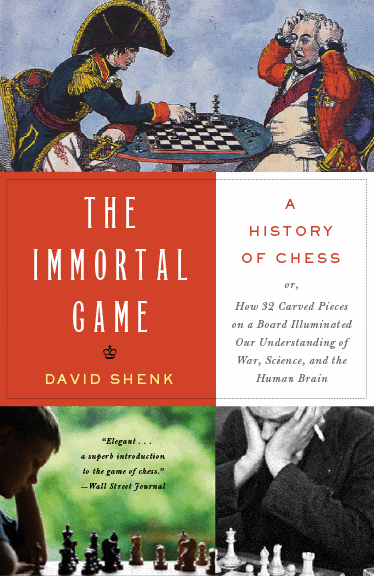 2006) was hailed as "superb," by The Wall Street Journal, "fresh and fascinating" by The Chicago Sun-Times, "engaging" by The Washington Post, and "a thrilling tour" by Entertainment Weekly. Author Jonathan Cott called it "one of the most remarkable books I've read over the past many years -- its 'brilliancy' illuminates so much of life in all its aspects."
(More reviews here). In 2011, Shenk was featured in the HBO film "Bobby Fischer Against the World." 2006) was hailed as "superb," by The Wall Street Journal, "fresh and fascinating" by The Chicago Sun-Times, "engaging" by The Washington Post, and "a thrilling tour" by Entertainment Weekly. Author Jonathan Cott called it "one of the most remarkable books I've read over the past many years -- its 'brilliancy' illuminates so much of life in all its aspects."
(More reviews here). In 2011, Shenk was featured in the HBO film "Bobby Fischer Against the World."
The Forgetting: Alzheimer's, Portrait of an Epidemic (Doubleday, 2001) won
First Prize in the British Medical Association's Popular Medical Book Awards, and was welcomed by John Bayley as "the definitive work on Alzheimer's." The Los Angeles
Times Book Review called it, "a remarkable addition
to the literature of the science of the mind." (More reviews here). In January,
2004, PBS broadcast "The Forgetting," a prime-time documentary
inspired by the book. In 2006, the book was featured in Sarah Polley's Oscar-nominated film "Away From Her." Shenk speaks frequently on the history,
biology and social urgency of Alzheimer's disease. He has advised the President's Council on Bioethics on
dementia-related issues, directed five short animated "pocket films" about Alzheimer's, served as a Senior Advisor to Cure Alzheimer's Fund, and is Creator/Executive Producer of the "Living with Alzheimer's" film project.
Medical Book Awards, and was welcomed by John Bayley as "the definitive work on Alzheimer's." The Los Angeles
Times Book Review called it, "a remarkable addition
to the literature of the science of the mind." (More reviews here). In January,
2004, PBS broadcast "The Forgetting," a prime-time documentary
inspired by the book. In 2006, the book was featured in Sarah Polley's Oscar-nominated film "Away From Her." Shenk speaks frequently on the history,
biology and social urgency of Alzheimer's disease. He has advised the President's Council on Bioethics on
dementia-related issues, directed five short animated "pocket films" about Alzheimer's, served as a Senior Advisor to Cure Alzheimer's Fund, and is Creator/Executive Producer of the "Living with Alzheimer's" film project.
Prior to The Forgetting, Shenk published
two books and dozens of essays on the emotional, social and
political ramifications of the information revolution. Data Smog: Surviving the Information Glut (HarperCollins, 1997) was hailed by The New York Times as "an indispensable guide to the big
picture of technology's cultural  impact." Neil Postman called it "brilliant," and the Toronto Globe and Mail called it "a blessing." The
book, profiled on 60 Minutes, was supported by a
fellowship from the Freedom Forum Media Studies Center at
Columbia University, and was later named a finalist for the
McGannon Award for Social and Ethical Relevance in Communication
Policy. Following Data Smog, Shenk wrote a column
for Hotwired, contributed commentaries to NPR's "All Thing's Considered," and co-founded "Technorealism," a movement encouraging balanced
consideration of technology's effects on humanity. In the Fall of 1998, Shenk spent two months in Japan on a United
States-Japan Foundation fellowship, exploring the ramifications of extreme
technology-saturation, collecting soba-choku, and drinking lots of green tea.
The End of Patience: More Notes of Caution on the Information Revolution (Indiana University Press, 1999) is a Data Smog-followup collection
of impact." Neil Postman called it "brilliant," and the Toronto Globe and Mail called it "a blessing." The
book, profiled on 60 Minutes, was supported by a
fellowship from the Freedom Forum Media Studies Center at
Columbia University, and was later named a finalist for the
McGannon Award for Social and Ethical Relevance in Communication
Policy. Following Data Smog, Shenk wrote a column
for Hotwired, contributed commentaries to NPR's "All Thing's Considered," and co-founded "Technorealism," a movement encouraging balanced
consideration of technology's effects on humanity. In the Fall of 1998, Shenk spent two months in Japan on a United
States-Japan Foundation fellowship, exploring the ramifications of extreme
technology-saturation, collecting soba-choku, and drinking lots of green tea.
The End of Patience: More Notes of Caution on the Information Revolution (Indiana University Press, 1999) is a Data Smog-followup collection
of  essays and commentaries which Sven Birkerts called, "Exhilarating to read . . . a startling glimpse of where
we are." Dan Rather commented, "Shenk may understand
the Information Age better than anyone else: he sees benefits
and perils that everybody else seems too rushed to notice,
and I predict that the notes of caution he sounds
in The End of Patience will be remembered by future
generations for their prophetic accuracy." essays and commentaries which Sven Birkerts called, "Exhilarating to read . . . a startling glimpse of where
we are." Dan Rather commented, "Shenk may understand
the Information Age better than anyone else: he sees benefits
and perils that everybody else seems too rushed to notice,
and I predict that the notes of caution he sounds
in The End of Patience will be remembered by future
generations for their prophetic accuracy."
Shenk's first book, Skeleton Key: A Dictionary For Deadheads (Doubleday, 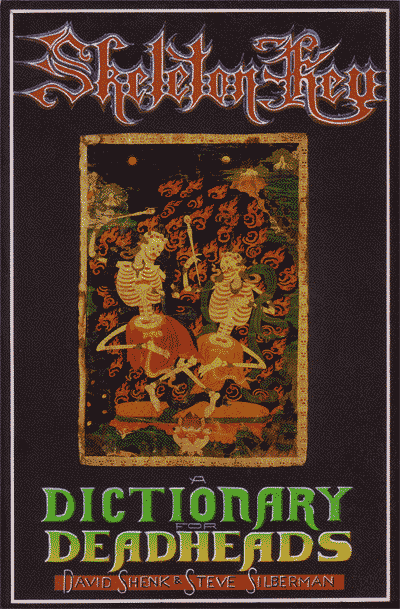 1994), was co-written with the great Steve Silberman. Wired lauded Skeleton Key as a "modern-day Joycean epiphany." The Village Voice called it "an elegantly written, one-size-fits-all passport to Deadhead culture's weird, rich pageantry." Rolling Stone praised it as being "Replete with a healthy sense of humor and an obvious
love for its subject...the mix of concrete and the absurd
reminds you of the Dead's music itself. 1994), was co-written with the great Steve Silberman. Wired lauded Skeleton Key as a "modern-day Joycean epiphany." The Village Voice called it "an elegantly written, one-size-fits-all passport to Deadhead culture's weird, rich pageantry." Rolling Stone praised it as being "Replete with a healthy sense of humor and an obvious
love for its subject...the mix of concrete and the absurd
reminds you of the Dead's music itself.
Shenk has also written about the emerging age of surveillance
for National Geographic, penned cover stories for The New Republic and The Nation, and created the popular "Survivalist" series for Slate. In 2010, he was awarded a Genomics Policy Fellowship at the University of Edinburgh. His writing appears in several collections, including the Encyclopedia of International Media and Communications, and has been translated into many additional languages. In 2004, his original term "data smog" was added to the Oxford English Dictionary.
___________________

BACKGROUND & FAMILY
Born and raised in Cincinnati, Ohio, Shenk's journalism career got off to an early start when he was appointed editor of the Hilltop Frolic Gazzette in the third grade. (See prescient editorial about multitasking litterbugs, above). In fifth grade, A Wrinkle in Time blew his mind, and that was that: it was all about writing. After a less-impressive stint as editor of the high school  newspaper, he was somehow admitted into Brown University. Four years there were not nearly enough. After graduating in 1988, he landed in Washington, D.C, where he spent some quality time with Dan Quayle, wrote for Spy, the Washington Post and the Washington Monthly, developed a passion for Ethiopian food, published something really dumb about the first Gulf War, met his future wife Alexandra Beers, made a cheeky documentary about the local mayor's race, and worked as a producer for NPR. newspaper, he was somehow admitted into Brown University. Four years there were not nearly enough. After graduating in 1988, he landed in Washington, D.C, where he spent some quality time with Dan Quayle, wrote for Spy, the Washington Post and the Washington Monthly, developed a passion for Ethiopian food, published something really dumb about the first Gulf War, met his future wife Alexandra Beers, made a cheeky documentary about the local mayor's race, and worked as a producer for NPR.
In 1993, craving less space, Shenk and Beers moved to New York. They subsequently got married and had two unspeakably-cool kids.

David is the eldest, shortest, and least-interesting of three brothers-Shenk. Number two, Jon Shenk, is an award-winning documentary filmmaker. Joshua Wolf
Shenk is a powerful writer and performer.
_________________________
Interviews, etc.
*ON WRITING*
-"The Art of Nonfiction," Lecture at Brown University, November 11, 2009
*ON THE GENIUS IN ALL OF US*
-Tavis Smiley, April 1, 2010
-Edinburgh Book Festival, August, 2010
-Talk of The Nation, March 22, 2010
-RadioWest with Doug Fabrizio, May 17, 2010
-Nature online interview, March 10, 2010
-Babble.com, March 10, 2010
-TEDxSF talk, April 27, 2010
- much more here.
*ON THE IMMORTAL GAME*
- Robert T. Tuohey interviews David Shenk, December 17, 2009
*ON THE FORGETTING*
- Noah
Adams interviews David on NPR's "All Thing's Considered,"
September 5, 2001
- The
Diane Rehm Show, September 25, 2001
-
Elizabeth Sams interviews David Shenk for BeliefNet,
June, 2004
*ON DATA SMOG AND THE END OF PATIENCE*
-
C-SPAN Interview, April 25, 1997
- Amazon.com Interview
*ON TECHNOREALISM*
-
Karen Christensen interviews David Shenk for The Berkshire Savant,
Winter, 2006
*ON MY DAD AS AN ARTIST*
-
TEDxRCP talk, May 4, 2013
 More bio material for media and appearances More bio material for media and appearances
- Hi-res
head-shot
- Lo-res
head-shot
|